
International Conference
“Mies Van Der Rohe. The Architecture of the City”
Politecnico di Milano
18-19 October 2019
Retracing Mies’ Modernism: the Anti-romantic City
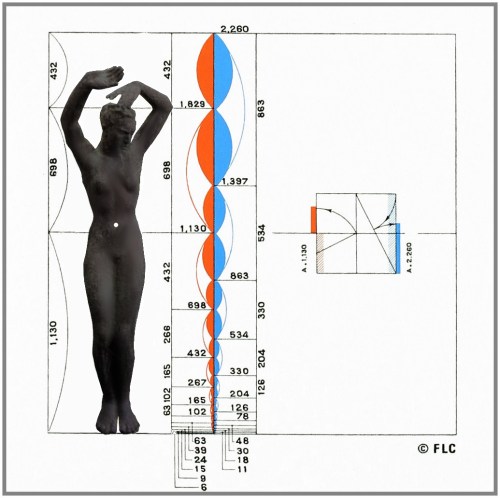
Abstract | Mies’ imitators have cemented some of the most divisive features of American urban development. However, when compared to other protagonists of the Modern Movement, Mies van der Rohe stands out for his sober approach toward the built environment. Never embracing the tabula rasa of Le Corbusier, Mies always looked for a constructive dialogue with history. It has been widely explored how the Miesian language draws inspiration from the archetypal buildings of Western antiquity. We will argue that the classicism in Mies’ work is not limited to architectural detail and composition, but extends to the urban presence of the building. Classicism is, indeed, a recurring word in decades of literature on Mies’ work, proving that the well-known literary quarrel between Romantics and Classicists was not settled in the nineteenth century but rather is an ongoing dialogue in history of human creativity. While shapes and materials had fatally changed with the Modernist revolution, the protagonists of the heroic upheaval against Beaux Arts’ “international style” operated in different, and often incompatible, aesthetic frameworks. Indeed, the Miesian schemes are not rooted in a strict geometric rule, yet they nonetheless appear to be intrinsically rigorous and human. As the android-like Modulor is a perfect fit for a city of cruciform hives, similarly, Georg Kolbe’s “Dawn” makes sense of the unique spatial quality achieved by Mies van der Rohe in the late 1920s. In this regard, the statue is a symbol of Mies’ stance toward context. She is anatomically disproportionate yet her posture suggests a feeling of both concern and delight that belongs to the existential. This essay will outline the main features of the Miesian “classic” approach to nature and urban design, comparing it to the “romantic” attitude still predominant in Modernist icons, most notably in the work by Le Corbusier.
 andrea valentini